For five hundred years, Latinx peoples across political borders have struggled for independence, peace, justice, democracy, and for Mother Earth. Revolutionary change in the U.S. and beyond will require a strong Latinx left, organizing for racial, language, national, and cultural justice within the U.S., and in support of and in conjunction with a renewed left in Latin American countries. Latinx people will comprise one third of the U.S. population within a generation; winning the next generation to socialism is an imperative. In order to contribute to the building of a strong, united, continental Latinx left, we offer perspectives and analysis from a range of U.S. and Latin American leftists.
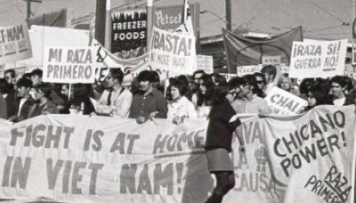
I wrote this piece in 2003, but want to share it with you now on the occasion of the fiftieth anniversary of the Chicano Moratorium. In this time of the Covid crisis, the upsurge of the Black Freedom Struggle, and
by Bill Gallegos
The recent visit to the US by Mexican President Andres Manuel Lopez Obrador (AMLO) for a meeting with President Trump has stirred a great deal of media reaction in the US and México. Nearly all US media
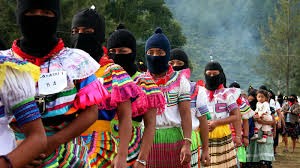
There is never just one viewpoint among any group of people. As we remember, the Zapatistas did not and do not support Morena; they do not believe in electoral politics and concentrate on creating autonomous zones for indigenous peoples to
1. Until AMLO took office last year, organized labor was dependent (and sometimes co-dependent) on the monolithic power of the PRI. PRI controlled the main labor federation, the CTM, whose members are seen as “employer unions.” Morena’s victory disrupted that cozy
History was made on December 1, 2018: progressive Andrés Manuel López Obrador, or AMLO, became President of México with 90% of the popular vote. His party, MORENA, originally a social movement and only 4 years old, won the majority of